Good Dog Academy
Canine Relaxation Skills
Tip Sheet
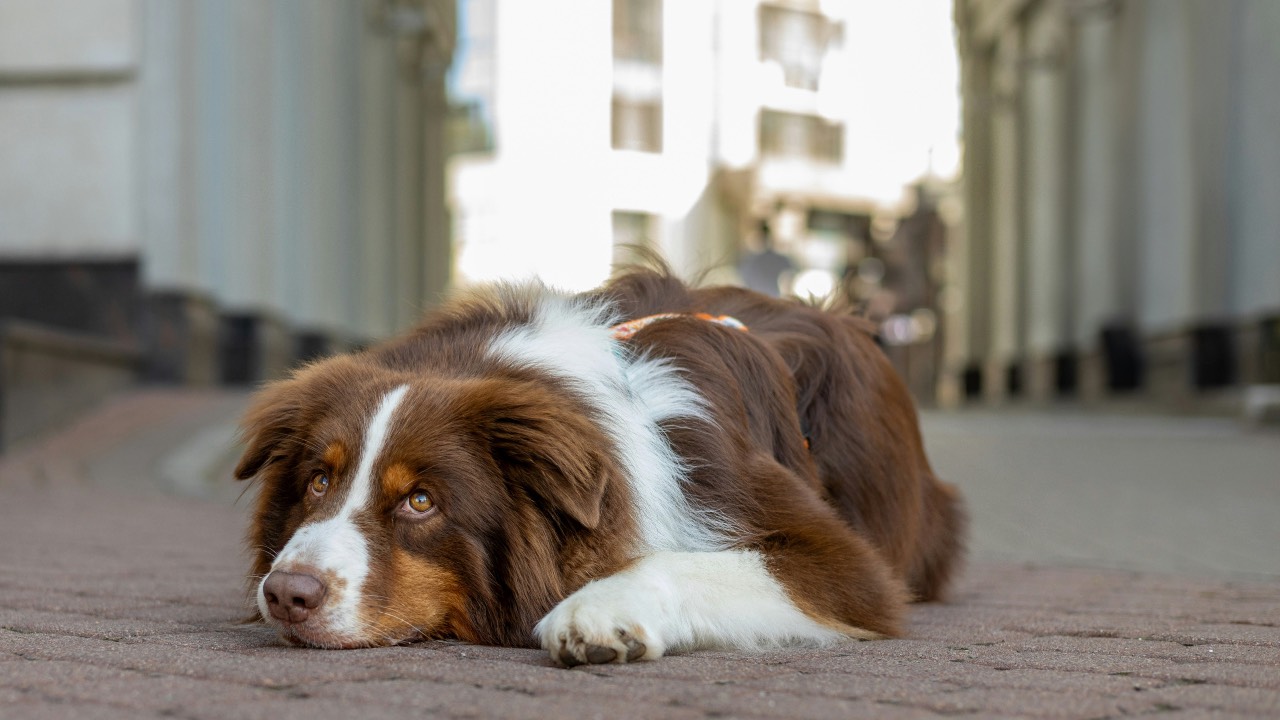
Through a better understanding of what relaxation truly looks like, and how to support it thoughtfully, you can help your dog develop the ability to settle, feel more comfortable in everyday life and experience the world with greater calm.
See the World Through
Your Dog's Eyes
Three simple questions that can change the way you think about relaxation.
When we think about helping our dogs relax, we may imagine tiring them out with a long walk, a busy day or lots of activity.
And sometimes a tired dog does settle down.
But being tired and being relaxed aren't necessarily the same thing.
Relaxation is an emotional state. It involves feeling safe enough to settle, disengage from what's happening around you and simply rest.
And that raises an interesting question.
What if relaxation isn't something we simply wait for our dogs to do?
What if it's something we can help them learn?
WHAT IF CALM WAS A TEACHABLE SKILL?
We teach our dogs all kinds of skills.
Sit. Stay. Come. Walk beside us.
But we don't always think about teaching the skill of doing nothing.
For some dogs, settling comes easily. For others, the world is simply too interesting, exciting or stimulating to switch off without a little help.
We can create opportunities for dogs to practise calm in the same thoughtful way we help them learn other skills.
That might mean providing a comfortable place to settle, reducing distractions, reinforcing moments of quiet behaviour or simply allowing enough time for a dog to discover that nothing is expected of them.
The goal isn't to force a dog to be still.
It's to help create the conditions in which relaxation can happen.
Calm doesn't always have to be something we wait for. Sometimes it can be something we help our dogs learn.
DOES YOUR DOG EVER TRULY RELAX?
A dog lying down isn't necessarily a relaxed dog.
They may be physically still while remaining alert to every sound, movement or possibility around them.
Watch your dog when they're resting.
Is their body soft or tense?
Are they constantly watching what's happening?
Do they spring up whenever you move?
Can they settle deeply enough to sleep even when ordinary life continues around them?
These little observations can tell us a great deal.
True relaxation isn't simply the absence of movement. It is a state in which the body and mind are able to settle.
Sometimes the first step toward helping a dog relax is learning to recognize what relaxation actually looks like for that dog.
WHAT IF DOING LESS HELPED YOUR DOG MORE?
When a dog seems restless or unsettled, our instinct is often to add something.
Another walk.
Another game.
Another training session.
Another activity to keep them occupied.
But more isn't always the answer.
Dogs need opportunities for activity, exploration, learning and social interaction. They also need opportunities to recover from them.
A dog whose day is filled with constant stimulation may have very little opportunity to practise simply being still.
Sometimes helping a dog relax means asking a different question:
Does my dog need something else to do, or do they need an opportunity to do less?
Creating quiet periods, allowing time between activities and making rest an ordinary part of the day can help dogs discover that life doesn't always require a response.
Sometimes doing less isn't doing nothing.
It's making room for calm.
START BY NOTICING
You don't need to completely change your dog's routine to begin thinking differently about relaxation.
For the next few days, simply watch.
When does your dog settle most easily?
What seems to make settling difficult?
What does your dog's body look like when they're truly relaxed?
How much uninterrupted downtime do they actually have?
You may begin noticing the difference between a dog who has stopped moving and a dog who has genuinely settled.
And that's really where relaxation starts:
not with asking a dog to be calm, but with understanding what helps that individual dog feel calm.
Canine Relaxation Skills will help you understand why relaxation matters and discover practical ways to help your dog develop the ability to settle and relax in everyday life.
Good Dog Academy
Stay curious. Keep seeing the world through their eyes.
Good Dog Academy
Ready to see relaxation differently?
Click the image to register.
Use your Discount or Coupon Code at checkout to save $5.
It also lets us recognize the community partner who helped you discover Good Dog Academy.